The Modulus Architecture
The battery backup that pays for itself.
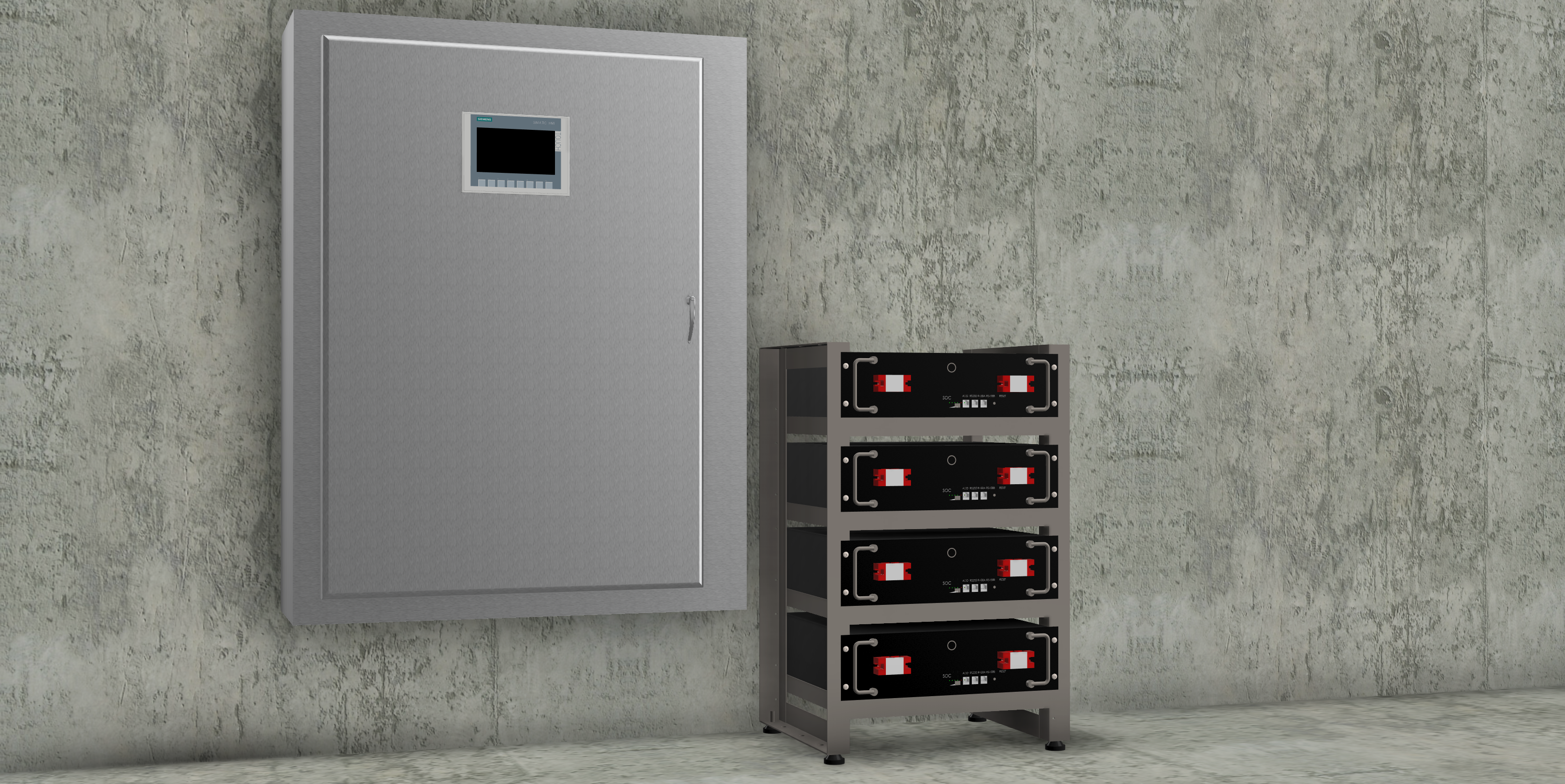
To reduce or eliminate costly demand charges, our battery backup solution features Dynamic Load Shifting (DLS) and Peak Shaving technology. Unlike traditional systems that only utilize battery power when grid energy is interrupted, our technology intelligently redistributes load to the battery modules, ensuring your metered power usage remains consistent.
We use leading edge high-power bi-directional inversion, DC-DC conversion and rectification technology to provide a streamlined solution to our customers. This allows our products to support a wide range of battery chemistries and voltages meaning our clients don’t have to worry about battery compatibility and can be perfect for drop-in retrofits.
- Local User Interface & Global Remote Access
- UL 9540 Edition 3 - Modular Battery Design
Peak Shaving Mechanism
What is Peak Shaving?
The average peak power demand charge in Canada is $14.79/kW of peak energy consumed for commercial and industrial customers. This means that most businesses are charged hundred to thousands of dollars extra on their bills each month. Peak shaving reduces or eliminates that charge by using battery power to maintain a maximum peak threshold. Batteries are charged during off times and discharged during high grid draw to supplement your power usage and reduce these extra charges.
Your building’s power profile can vary depending on the loads in the building. Some loads are consistent throughout the day, whereas others are uneven and “peaky” on a short time scale. These peaky loads come from a variety of sources such as HVAC turning on and off, compressors from coolers or other processes, and water heaters. A short-interval peaky load is ideal for taking advantage of a peak shaving system without having to spec batteries to run all day.
Built for Your Infrastructure
Our devices are custom engineered to order; we build modules based specifically on your load requirements and site constraints.